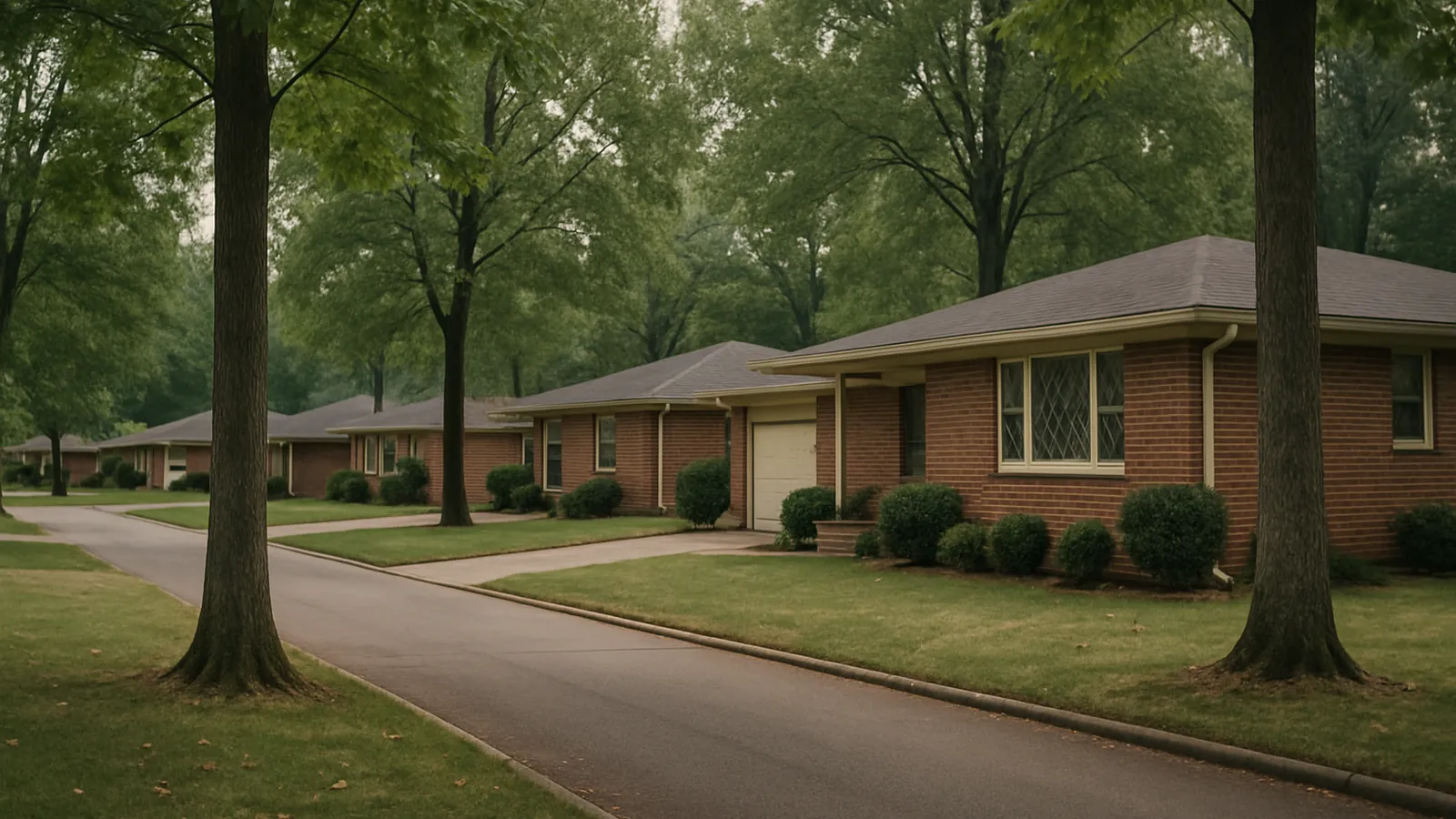
Crawl space mold removal in Chattanooga runs $2,500–$9,000. On hillside homes the crawl is cut into the slope, so the uphill wall sits below grade and stays damp while the downhill side is open and dry — and growth concentrates on the wet end.
Why one crawl space has two climates, why routine inspections miss it, and the order the work has to happen in.
Two climates, one floor
Hillside construction is ordinary here, and it produces a crawl space that is not a single environment. Cut a level pad into a slope and the uphill foundation wall ends up below grade, holding back damp earth and running cool year-round. The downhill wall ends up at or above grade, with vents and daylight and moving air.
Under one floor, then, you get a genuinely wet zone and a genuinely dry one. Framing above the uphill wall carries higher moisture content, stays cooler, and grows things. Framing thirty feet away at the downhill end can be entirely sound. Both are true at once, which is exactly what makes this easy to misdiagnose.
Why the door is on the wrong side
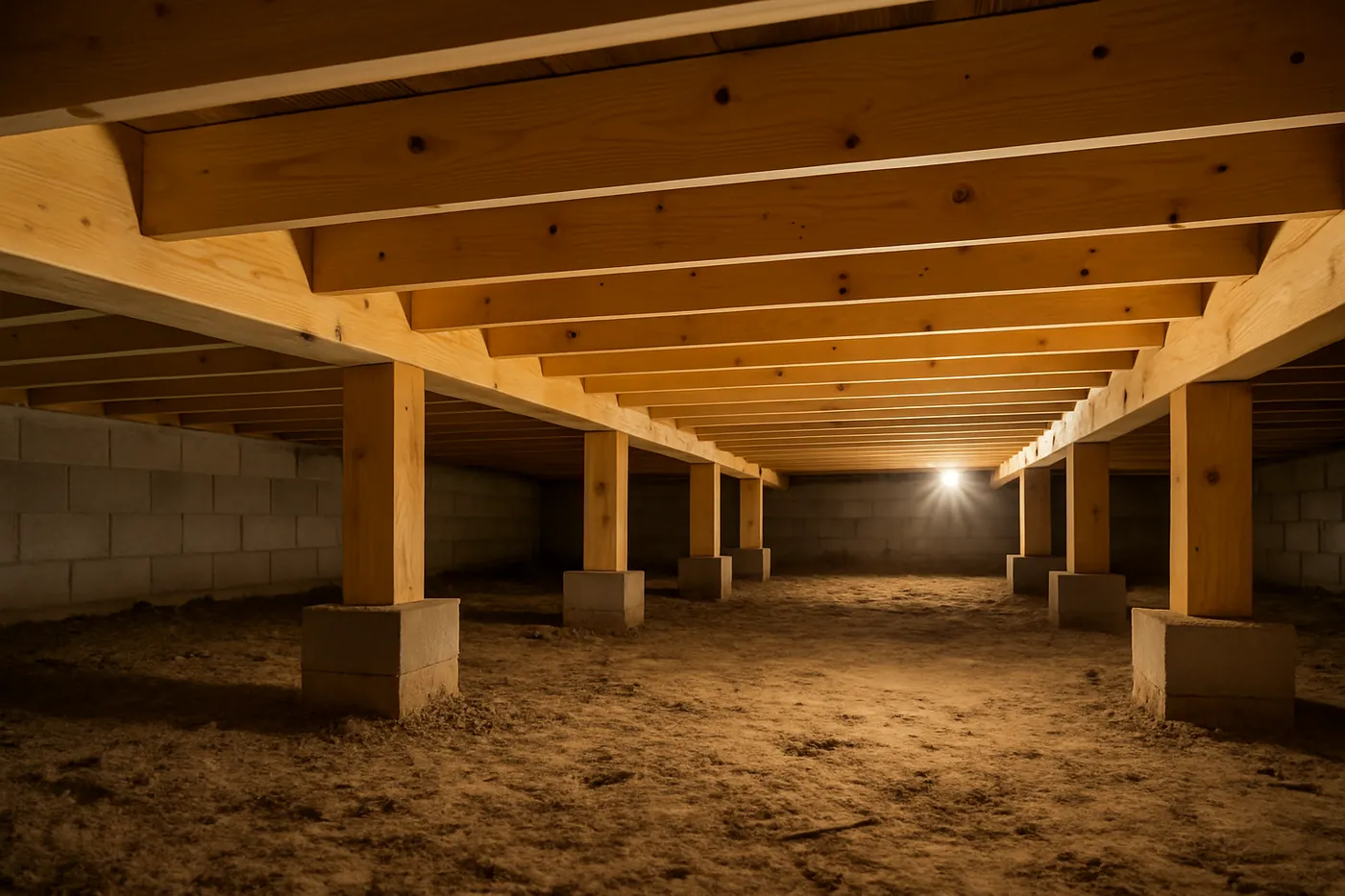
The crawl access is nearly always placed where it is convenient to build — the open, downhill side. So the routine sequence is: someone opens the hatch, shines a light on the nearest framing, sees sound wood, and reports the crawl space as fine.
They are not being dishonest. They inspected the third of the space least likely to have a problem. The reading that decides the question is taken at the far uphill wall, which means getting all the way back there. Any inspection of a hillside crawl that does not report a moisture reading from the uphill end has not answered the question.
What turns up, and what each finding costs
| Finding | What it means | Typical cost |
|---|---|---|
| Growth on joists above the uphill wall | Below-grade wall holding moisture | $2,500–$9,000 with the water corrected |
| Wood moisture above 20% at the uphill end only | Early — conditions present, growth limited | Correct water, monitor, often under $3,000 |
| Standing water after a storm | Runoff entering along the uphill wall | Exterior correction first, a few hundred to a few thousand |
| Uniform growth across the whole crawl | Humidity, not a directional water source | Sealing and dehumidification after remediation |
| Insulation fallen and dark | Wet fiberglass, holding damp against the subfloor | Removal is cheap and usually overdue |
| Ductwork sweating | Cold supply lines in humid crawl air | $1,000–$4,000 |
The order that holds
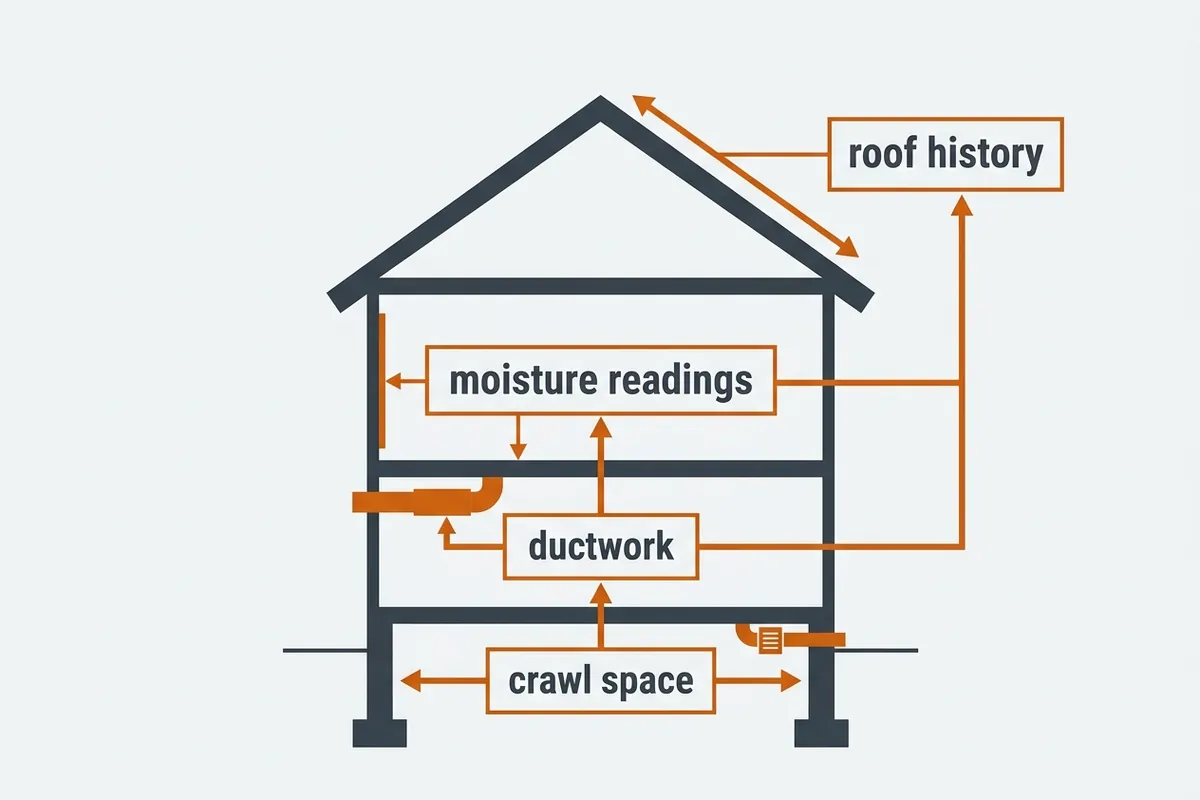
Water, then remediation, then sealing. On an uphill wall that is actively taking water, sealing the crawl first puts a liner over an active source and hands a dehumidifier a load it cannot win. Remediating before the water is corrected produces clean framing that is wet again by spring.
Ask for a scope that prices the three stages separately so the sequence is visible and you can phase it deliberately. Numbers are in the cost guide.
What you can check yourself
Take a flashlight and go to the far uphill corner rather than the one by the door. Look at the joists and the subfloor above that wall, look at whether insulation there is sagging or dark, and put a hand on the foundation wall itself to feel whether it is noticeably cooler and damp. If the answer differs from the end near the hatch, you have found the thing most inspections here miss.
What homeowners ask about crawl spaces
What does crawl space mold removal cost in Chattanooga?
Crawl space work runs $2,500-$9,000 depending on square footage, how much framing is affected, and what has to change to keep the space dry. On hillside homes the cost concentrates on the uphill portion, because that is usually where the moisture and the growth are.
Why is only part of my crawl space affected?
Because on a house cut into a slope, the crawl is not one environment. The uphill wall sits below grade against damp earth and stays cool; the downhill side is at or near grade and gets air. That produces a genuinely wet third and a genuinely dry third under the same floor, with growth concentrated on the wet end.
The inspector said my crawl space looked fine. Can they be wrong?
It happens constantly on slope lots, because the access door is almost always on the downhill side - the dry end. Someone who opens the hatch, looks at accessible framing, and leaves has inspected the third of the crawl least likely to have a problem. The reading that matters is taken at the far uphill wall.
Does encapsulation solve crawl space mold?
It is part of the answer and rarely the whole one. Sealing the space controls evaporation from the soil, but on an uphill wall that is below grade and taking water, sealing without addressing that water traps it. Correct the water, remediate the growth, then seal - in that order.
Can crawl space mold affect the air upstairs?
Air moves upward through a house, and replacement air comes from the lowest point available, which in a home over a vented crawl is the crawl. That is the mechanism by which a musty smell reaches a first-floor room with no visible problem in it. It is also why crawl work is worth doing properly.
Get a Chattanooga mold inspection
Tell us what you are seeing or smelling — dark spots on a cold exterior wall, a musty smell in one room, condensation on a window frame that never dries, staining in a closet on the north side. A good visit includes surface temperature readings and a trip under the house. A local specialist who serves Chattanooga will call you back.