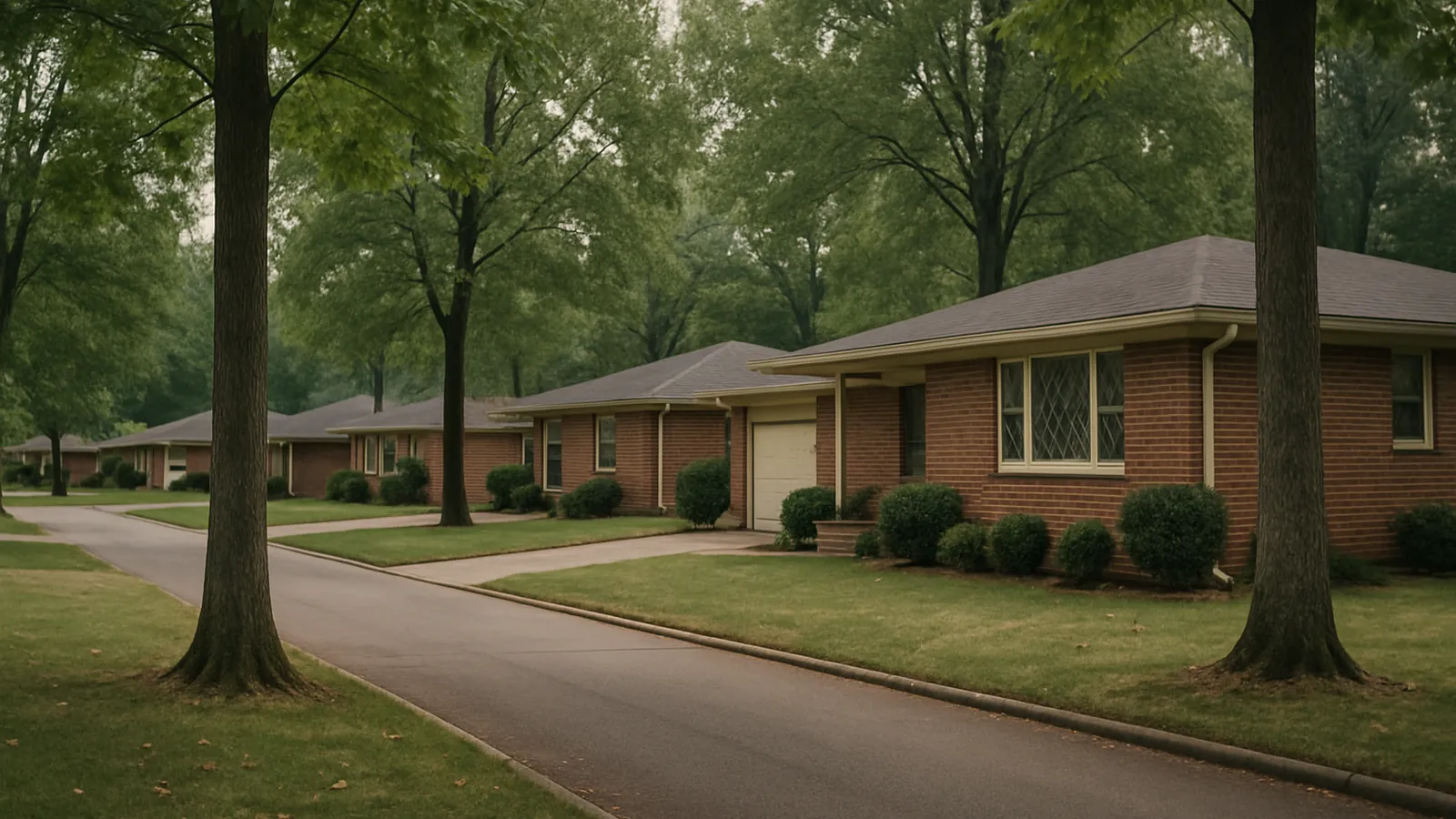
Mold removal in Chattanooga costs $1,500–$6,000 for most remediation, $2,500–$9,000 in a crawl space. Cool air settles into this valley and lingers, so surfaces dry slowly — and much of the growth here is condensation rather than a leak. Many local specialists don't charge for the inspection; ask when they call.
What the valley does to moisture, why your mold season starts in winter, and the one measurement that predicts where it grows next.
The air comes down here and stops
Chattanooga sits in a river valley between ridges. On a clear night, air cools against the high ground, sinks into the low ground, and pools there until the sun moves it. It is the same behavior that made this city’s mid-century air pollution notorious, and it does to humidity exactly what it did to smoke.
The consequence for a house is that things dry slowly. A damp surface in most markets gets a few dry hours to recover. Here it often does not get them for days. So the measurement that matters is not the rainfall total — it is how close a given surface sits to the dew point of the air touching it.
Your mold season starts in January
About 54 inches of rain lands here in a normal year, near the top of the state — and it arrives mostly in winter and spring, which is backwards from most of the South. That inverts the usual assumption. Homeowners associate mold with August humidity, but a great deal of what turns up in April established in February — on a cold exterior wall, in an unheated closet, on attic sheathing above a bathroom fan.
Summer then keeps it alive. Establish in the cold, persist in the heat. Which means a removal scoped without a plan for next winter is a removal you will buy again.
What to do about it
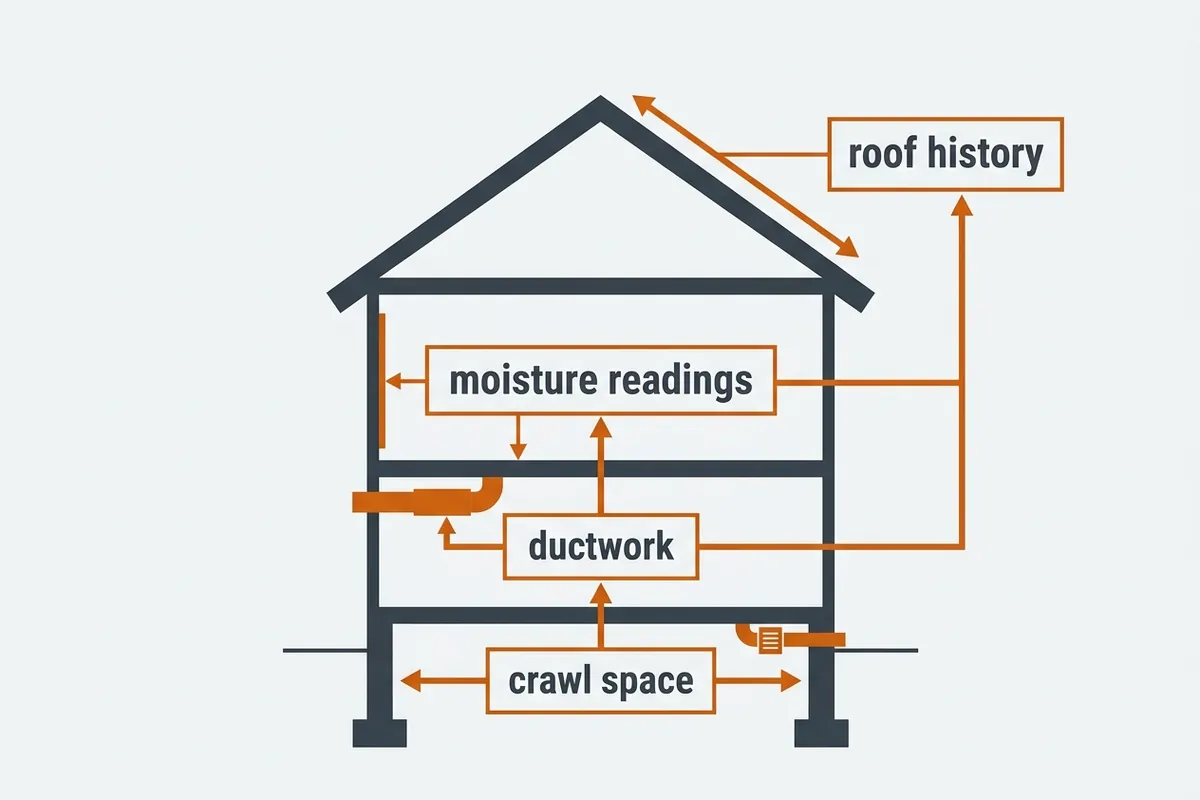
| What you are noticing | What it usually means | The work | Typical range |
|---|---|---|---|
| Dark spots on a cold exterior wall | Surface below the dew point in winter | Remediation plus a surface fix | $1,500–$6,000 |
| Musty smell coming up through the floor | The uphill end of a hillside crawl | Crawl space work | $2,500–$9,000 |
| Staining on the roof decking | Warm indoor air meeting cold sheathing | Attic remediation and air sealing | $1,500–$5,000 |
| Smell in several rooms when the system runs | A return duct leaking in a damp space | Seal the return, clean the system | $1,000–$4,000 |
| Water from a storm or a burst line | A 24-to-48-hour clock, already running | Emergency drying | $1,000–$8,000 |
| Dark growth and an alarming quote | Vocabulary doing work the scope should do | Read the scope, not the label | Same as any job that size |
Each range above is taken apart line by line in the Chattanooga cost guide, including the jobs where the honest recommendation costs a few hundred dollars.
One measurement, and why it predicts
Dew point is the temperature at which the moisture already in the air condenses out of it. Every surface in your house has its own temperature. Where a surface runs colder than the dew point of the air against it, that surface gets wet — repeatedly, with nothing leaking.
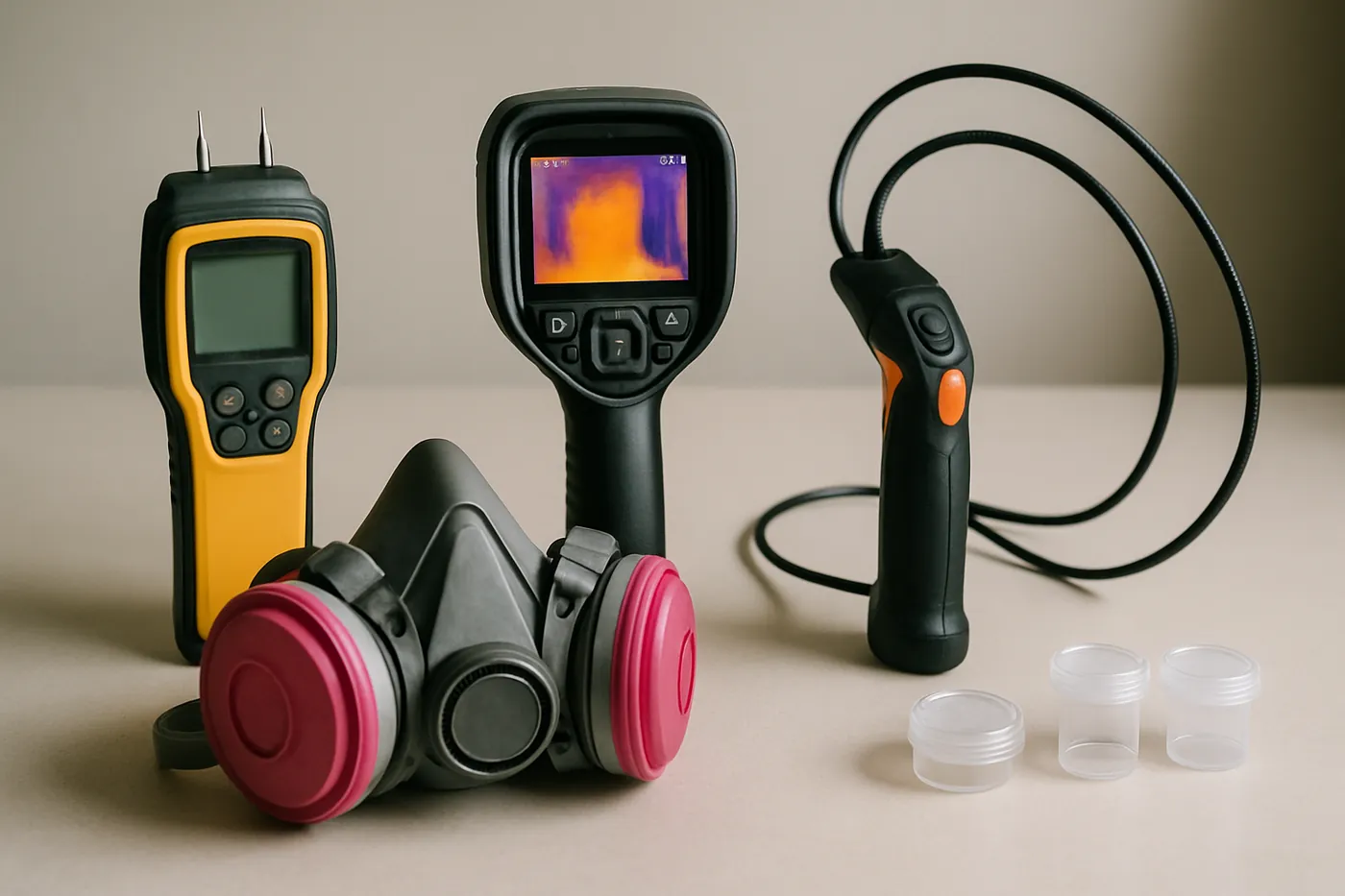
That comparison is why a good inspection brings a thermometer and a hygrometer rather than just a flashlight. It explains growth that has no plumbing cause, and it is predictive: it identifies the closet, the north wall, the uphill crawl corner that will grow something next winter before it has. Looking for stains cannot do that.
Ask where they took the reading
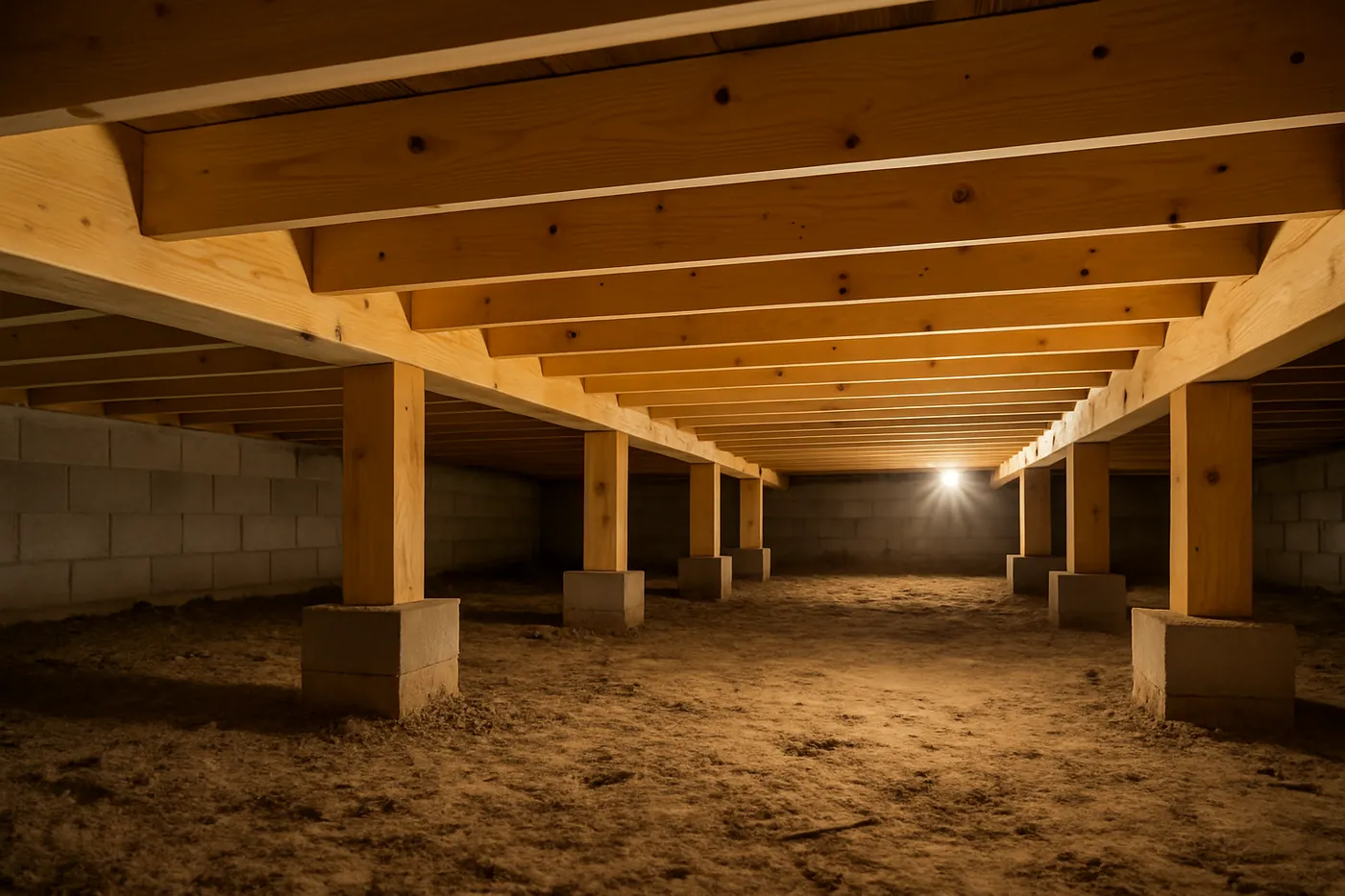
Hillside construction is ordinary here, which means a crawl space cut into a slope is below grade on the uphill side and open on the downhill side — a genuinely wet third and a genuinely dry third under one floor. The access hatch is almost always on the dry side.
So an inspector who opens the door, looks at nearby framing, and reports the crawl as fine has inspected the part least likely to have a problem. Before you accept that answer, ask for a moisture reading taken at the far uphill wall.
What we won’t recommend
- Remediation without naming the water source. That sentence is the whole difference between a diagnosis and an invoice.
- Testing to decide whether to remove visible growth. The removal is the same either way; testing belongs in disputes and unexplained cases.
- Sealing a crawl space that is still taking water. Correct the source, remediate, then seal.
- Adding attic ventilation before air sealing. It can pull more humid air up from the house.
- Opening the windows to dry a wet room in the wet season. Outdoor air here is frequently no drier than indoor air.
Three questions get their own pages: what the phrase “black mold” does and does not tell you, how a leaking return duct distributes one damp crawl space to every room, and what insurance actually covers once you find your policy’s mold sublimit.
Mold questions Chattanooga homeowners ask
How much does mold removal cost in Chattanooga?
Most remediation runs $1,500 to $6,000. Crawl space work is $2,500 to $9,000, attic work $1,500 to $5,000, duct systems $1,000 to $4,000, and whole-home or structural jobs $6,000 to $15,000. The inspection that decides which applies includes the readings.
Why is mold such a problem in this valley?
Two reasons that compound. Cool air settles into the river valley between the ridges and does not readily clear, so humid air lingers and surfaces dry slowly. And the roughly 54 inches this metro collects each year lands mostly in the cold half of the calendar, when interior surfaces are cold enough to condense it.
Does mold really start in winter here?
Frequently, yes, and it is the local fact most homeowners have backwards. Growth found in April commonly established in February on a cold exterior wall, an unheated closet ceiling, or attic sheathing. Summer humidity then sustains it. Removal done without a plan for next winter tends to be temporary.
Do I need testing before removal?
Usually not. Visible growth is remediated the same way regardless of species, so testing rarely changes the plan. It earns its cost in disputes, in unexplained symptoms, and where nothing visible has been found. When it is warranted, use an independent hygienist rather than the company doing the work.
Is my crawl space really fine?
On a hillside home, ask where they took the reading. The access door is almost always on the open downhill side, which is the dry third. The uphill wall sits below grade and stays damp, and that is where growth concentrates. An inspection that stopped at the hatch answered a different question.
Will insurance pay for it?
When the cause is sudden and accidental - a burst line, an appliance failure, a storm breach - often yes, subject to a mold sublimit that is usually far lower than your policy limit. Condensation and humidity growth is generally excluded, which covers a large share of what turns up here.
Mold removal across the Chattanooga metro
East RidgeRed BankSoddy-DaisySignal MountainHixsonOoltewahClevelandFort OglethorpeRinggold all service areas
Get a Chattanooga mold inspection
Tell us what you are seeing or smelling — dark spots on a cold exterior wall, a musty smell in one room, condensation on a window frame that never dries, staining in a closet on the north side. A good visit includes surface temperature readings and a trip under the house. A local specialist who serves Chattanooga will call you back.