Insurance covers mold removal in Chattanooga when it results from a sudden accidental water discharge — a burst line, an appliance failure, a storm breach — usually subject to a separate mold sublimit in the low thousands. Humidity and condensation growth is typically excluded.
Where the line falls, the number to look up before you need it, and how to document a claim that survives.
Sudden versus gradual
Policies separate water events by how they happened, not by how bad they are. A supply line that bursts on a Tuesday is sudden and accidental. A drain connection that has been weeping behind a cabinet for two years is gradual, and gradual is generally excluded no matter how much damage it eventually caused.
This matters here because so much of what turns up here is neither — it is condensation, driven by cold surfaces and humid valley air rather than by any leak at all. That category almost always falls on the homeowner, which is worth knowing at the start rather than after six weeks of waiting on an adjuster.
The number to look up now
Even on a covered loss, most policies apply a mold sublimit: a separate cap for mold remediation specifically, frequently far lower than the policy limit and often in the low thousands. The water damage may be covered generously while the mold portion is capped tightly.
Find that number in your policy before you have a claim. It is usually under a heading like “Fungi, Wet or Dry Rot, or Bacteria,” and it tells you in advance how much of a remediation you are actually insured for — which changes how you think about the first forty-eight hours, when fast drying can keep a job from becoming a mold claim at all.
What decides a claim
| Evidence | Why it matters |
|---|---|
| Dated photographs from before anything was moved | Establishes the scene and the timeline |
| The failed component, retained | Physical proof of a sudden mechanical failure |
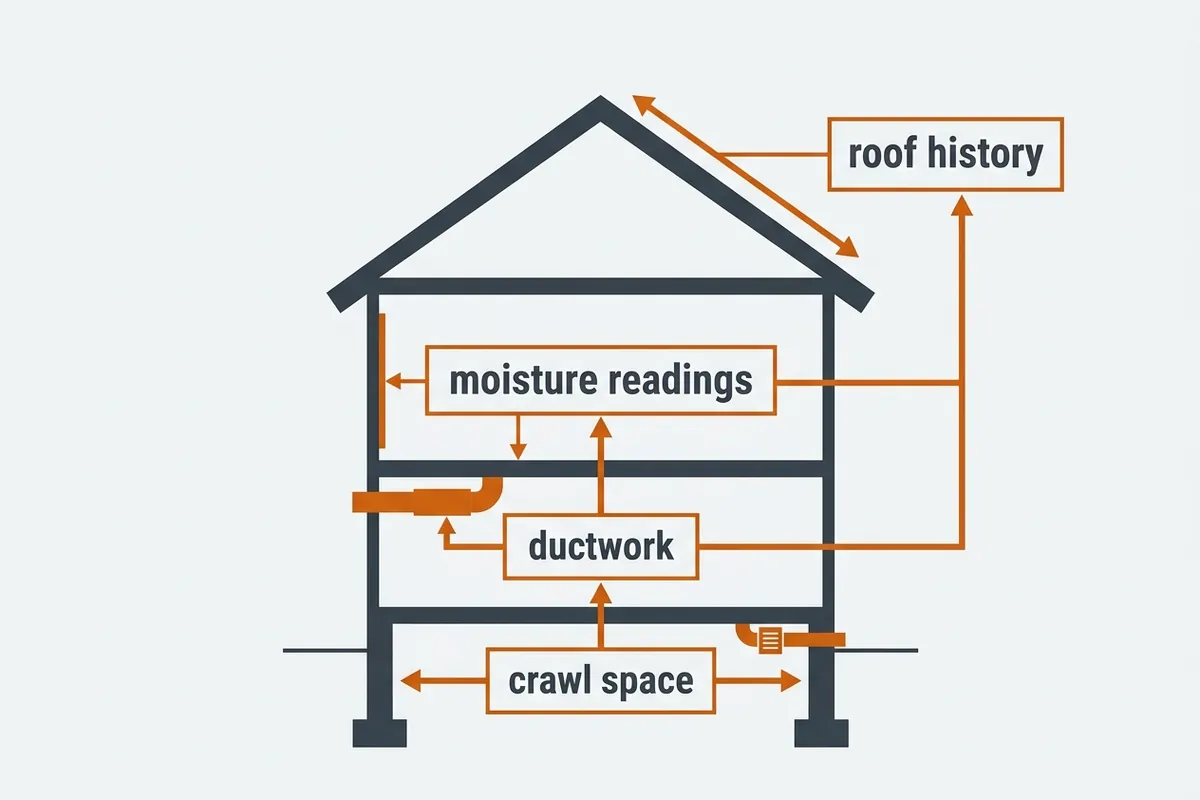
| Dated moisture readings | Quantifies extent and supports the timing |
| A record of when you noticed and what you did | Prompt action is itself part of the claim |
| A written scope naming the water source | Gives the adjuster a cause and a number |
| Your policy’s mold sublimit | Determines what the argument is even worth |
Where storm claims go wrong
This corridor takes real weather, and a storm breach is normally a covered sudden loss. The failure mode is not coverage — it is scope. A roof gets tarped or patched, the visible leak stops, and the wall cavity that took water is never opened or dried. Growth continues inside finished construction, and by the time it surfaces the claim is old and the causation argument is harder.
Insist that cavities be read with a meter rather than judged by appearance, and that drying be documented to a moisture content. That record is what makes a later conversation short.
What the specialist can and cannot do
Ask the specialist for the readings, photographs, and a written scope naming the water source, and whether they will speak with your adjuster about what they measured. Nobody can promise a claim will be paid, and a contractor does not adjust claims — that is between you, your agent, and your policy.
What remediation costs without insurance is in the cost guide, so you can make the decision either way.
What homeowners ask about coverage
Does homeowners insurance cover mold removal in Tennessee?
It depends entirely on the cause. Mold resulting from a sudden accidental discharge of water - a burst supply line, an appliance failure, a storm breach - is commonly covered, often subject to a mold sublimit. Mold from long-term seepage, humidity, condensation, or deferred maintenance is typically excluded.
What is a mold sublimit?
A second, much lower ceiling that applies to mold alone, and it holds even where the water loss underneath it is fully covered. Figures in the low thousands are typical. It is often the deciding number on a claim and it is rarely mentioned until a claim exists, so it is worth finding in your policy before you need it.
My mold is from condensation. Is that covered?
Usually not. Condensation-driven growth is generally treated as a maintenance and humidity issue rather than sudden damage, and that describes a meaningful share of what turns up in this valley. It is worth knowing early so you can make a decision about repair rather than waiting on a claim that will not come.
How do I document a claim properly?
Photograph everything before moving anything, with dates preserved in the files. Keep the failed component if a part broke. Get dated moisture readings. Record when you first noticed and what you did. Adjusters accept sudden causes that are documented and decline sudden causes that are asserted.
Should I file before I know the cause?
Talk to your agent about how inquiries are recorded first. Claims history follows the property, and a denied mold claim can affect future pricing while paying nothing. Establish the cause with an inspection - and where a plumbing failure is suspected, a leak test - then decide whether a covered cause exists.
Get a Chattanooga mold inspection
Tell us what you are seeing or smelling — dark spots on a cold exterior wall, a musty smell in one room, condensation on a window frame that never dries, staining in a closet on the north side. A good visit includes surface temperature readings and a trip under the house. A local specialist who serves Chattanooga will call you back.